
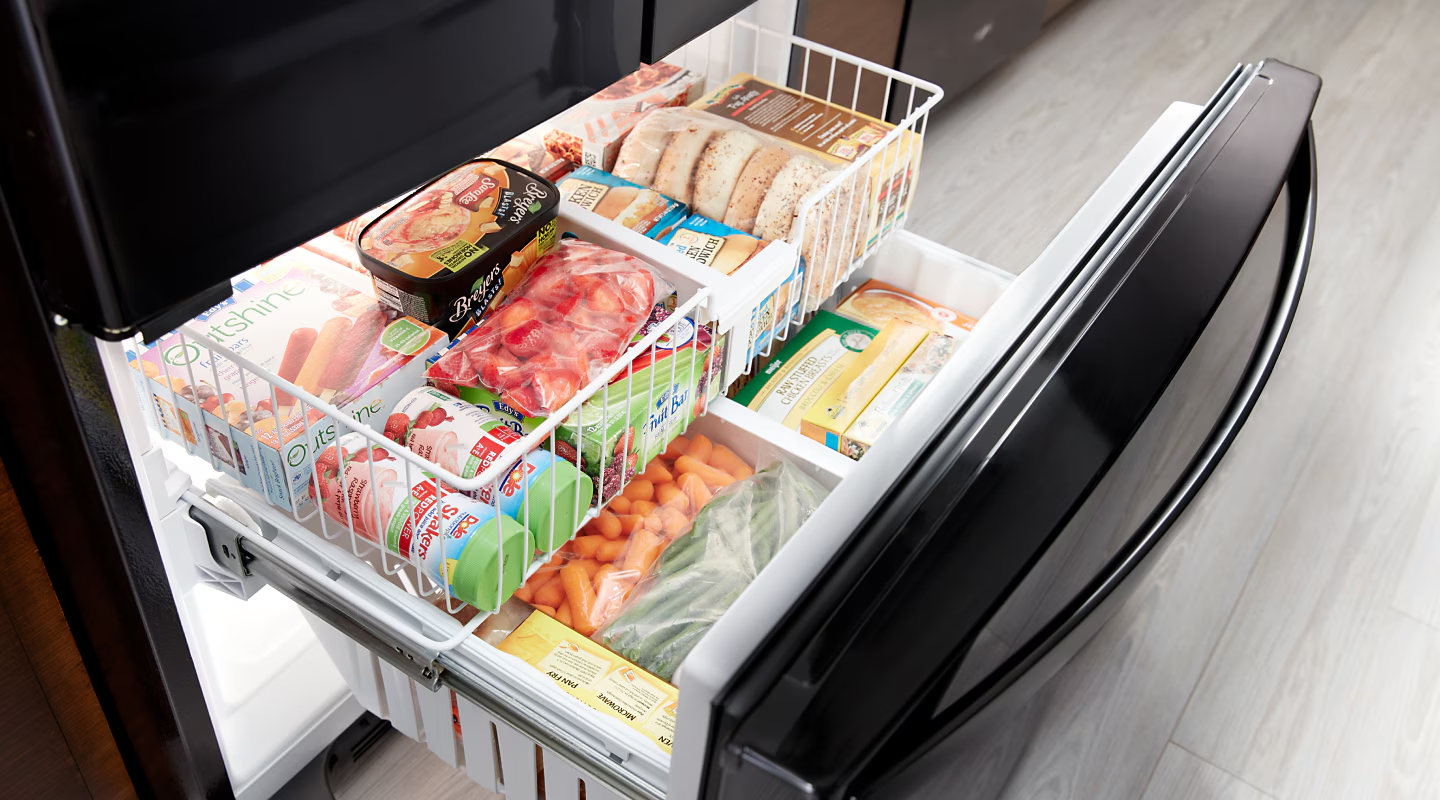
Did you ever wonder what would happen to your frozen food when there is a power failure? What is the time it may be safely stored without spoiling? You are advised to work quickly since the quality of food in the freezer may be lost due to increase in temperature. Simple measures can help in securing your meals such as checking the amount of ice.
There is no reason to panic, yet knowing the precise time can make you plan the meals and prevent food wastage. Eating healthy saves you money and prevents food poisoning as well.
Understanding How Freezers Preserve Food
One should also understand that food preservation is not the only purpose of freezers which stop the development of bacteria and chemical reactions causing food spoilage. Food can be stored in days or even months as long as the temperature and storage is taken into account. One does not need to freeze everything at once, although it helps to store everything systematically.
You can notice that some foods have a longer shelf-life than other ones, and it is not extraordinary. Regular checks should also be done on seals, frost build up and temperature. Wasting and spoilage can be prevented by knowing the operation of your freezer, and by following simple precautions.
Factors That Affect How Long Food Stays Frozen
You need to know that the time of storage is affected by the type of food, packages, and the efficiency of the freezer. You are able to store meat, vegetables and prepared meals in varying durations safely. You cannot afford to be guided by just looks; frozen foods can spoil without notice. You can also observe that homemade food does not freeze in the same way as food bought at a store.
To monitor freshness, you should check the label and date on packages. When storing, you can also consider portion size, moisture content and fat levels. You do not leave food without checking on it, since a combination of these factors will assist you in maintaining food safety, minimizing waste, and making meal plans efficiently.
What Happens When the Power Goes Out
It is important to note that a power outage may lead to a gradual depletion of temperature in your freezer and this can compromise the safety of frozen food. It is possible to observe the melting of ice and the softening of the frost, which are indicators of thawing. There is no need to panic at this point, but it is important to monitor your freezer.
You also might have partial thawing that may spoil when neglected. The freezer door should be kept closed to maintain the cold as long as possible. To keep the temperature low, you can use ice packs or cold materials wrapped up. You never leave food without control, the timing is important as far as safety is concerned.
How Long a Freezer Can Keep Food Safe Without Power
You are supposed to know that when properly packed in a full freezer, the food can take as long as 48 hours before food spoils. This could be extended by wrapping items around one another to insulate them. You do not open the door often, since it speeds up warming. You can observe how a half full freezer becomes cold sooner, be wise in planning on how to store.
Another thing to remember is the outside temperature; a hot house accelerates thawing. To be on the safe side, you may add ice or frozen water bottles. You do not forget to monitor the time when the power is out, as understanding the lifespan of food precisely will stop wastage and health problems.
How to Check if Food Is Still Safe to Eat After an Outage
To know whether there is safe frozen food, you should test the temperature, texture, and smell. A thermometer can be used to get accurate readings and the target should be less than 40 o F when dealing with partially frozen foods. You will not taste food without being certain that it is safe. Meat, dairy and prepared meals can be separated and inspected separately.
You are also advised to get rid of food that smells bad, is oily or has odd color shades. Packaging can also be examined to check whether it has ice crystals to indicate safety. It is not so dangerous to guess and feel sick, though after a proper examination you can be assured that you eat only safe and uncontaminated food.
Using Thermometers and Ice Tests to Monitor Temperature
A freezer thermometer is to be used to monitor internal temperatures in the case of a power outage. There is one more easy ice test that you can perform: you would have to check whether ice cubes are still frozen after several hours. You cannot solely depend on feeling since it can deceive you. You can note the temperature every hour so that you can know when food is not safe.
There should also be emergency ice packs in case of a long outage. It is possible to rearrange the freezer so that cold products are in one place and their safety is prolonged. You do not disregard the data of thermometers, as regular control will allow you to avoid food poisoning and waste, which would otherwise go to waste.
Tips to Keep Food Frozen During a Power Outage
It is necessary to understand that maintaining your freezer throughout the power outage needs planning and clever measures. You can reduce thawing by keeping it cold and minimizing open doors. You do not wait until you are in an emergency to plan, since you can save food and avoid wastage with easy measures.
Ice packs, or dry ice, or block food together will help keep the food temperature longer. You are supposed to check the temperature of your freezer and evaluate half thawed products. You may arrange your freezer in advance before the outages to make it more insulated. You do not disregard emergency preparation, as a small preparation will keep food safe and edible.
Keeping the Freezer Door Closed as Long as Possible
When there is a power outage, you should not open the freezer door to retain cold air. To minimize the unnecessary openings you can plan the meals before the outage. You do not think that short openings are ineffective; even short exposure may accelerate thawing. You can label objects to quickly grab them when necessary.
You need to remind all members of the household to be careful with the use of doors. It is also possible to have commonly used items at the top so that they will be accessed more quickly. You do not overlook the fact that it is important to close doors, as a consistent cold temperature is one sure way of preserving your food and ensuring that it does not go to waste.
Using Ice Packs and Dry Ice to Extend Freezing Time
You ought to think of ice packs or dry ice in order to keep the temperatures low in the case of long outages. To thaw items, you may surround them with ice packs. You do not play with dry ice, you must wear gloves and get the air moving. To keep your frozen food colder longer you may place the frozen food on top of ice blocks.
To determine the amount of ice required, you should estimate the size of the freezer. You may prepare small containers with water in advance to freeze additional ice. You are not underestimating the importance of additional cooling, as these measures can prolong safe storage periods considerably in the event of unforeseen power interruption.
Grouping Food Together for Better Temperature Retention
When there is a power outage, you should pack frozen food closely and this forms an insulation against each other. You can stack similar items to minimize airflow to keep cold longer. You never leave space between items, air pockets warm quickly. To have a more stable temperature, you can arrange the freezer with heavier products at the bottom.
It is also important to maintain a distance between raw and cooked food and keep them in proximity to retain the cold. Trays or containers can be used to block the cold effectively. You do not overlook strategic position, since grouping of food contributes to extending the safety, and minimizing spoilage during an outage.
Conclusion
It is important to note that preserving food during power outages is a process that needs urgency and proper planning. Spoilage can be avoided by ensuring that the doors of the freezers are closed, by putting the food in a group and by use of ice packs or dry ice. You are not operating by guesswork; temperature checking assists you in making intelligent choices.
It is also possible to create an emergency plan beforehand to eliminate stress and food waste. Thawed food must be checked thoroughly and any unsafe food must be discarded. By adopting these steps, which are not very complicated, you will be able to save money, safeguard the health of your family and waste less.
Frequently Asked Questions
What is the maximum duration a full freezer can remain unrefrigerated?
It is important to note that a full freezer can preserve food up to 48 hours when the door is not opened. You may go a little further and put in ice packs. You do not open the freezer very often, as cold air leaks out too fast, and food thaws too quickly.
Is it possible to refreeze partially thawed food?
It is possible to refreeze food as long as it has ice crystals and the temperature is lower than 40F. Before refreezing, you are supposed to take care of the texture and smell. You never freeze food that is already thawed and displays any sign of spoilage as this may render it unsafe and risky to contract an illness.
How do I know whether frozen food has spoiled or not?
Frozen food should be checked with regard to the color, texture and smell. You are able to perceive melting ice or slimy surfaces or unpleasant smells. You never eat food that seems to looks or smell different. You can individually isolate objects to examine them and see whether they are safe to eat.
Does a half full freezer lose cold more quickly than a full freezer?
The fact is that a half full freezer will melt faster than the one that is full because the cold air will move freely. Ice packs can be used or food can be clumped together in order to maintain cold. You do not overlook this fact, since this influences the length of time during which food remains safe in an outage.
Which emergency supplies should I have in the freezer?
In case of an emergency, it’s important to have a thermometer, ice packs, dry ice, and coolers ready for use. One can schedule the storage of food and arrange items together to ensure they remain cold. You do not wait until power is cut off to prepare, because making everything ready will ensure proper protection of food and less wastage.